Saturday, June 6, 2026

The Great Renaissance: Tracking India’s Decade of Structural Transformation


At the turn of the millennium, global economic observers routinely described India as a nation of immense, yet persistently deferred, potential. It was an economic geography defined by sharp paradoxes: a global powerhouse in software code execution that lacked the physical infrastructure to move industrial goods efficiently; a cradle of world-class mathematical and engineering minds that imported virtually all of its deep-tech hardware; and an economic engine where basic quality-of-life amenities like permanent housing, running tap water, and formal banking access were treated as scarce privileges rather than universal public infrastructure.

Fast forward to 2026, and that old baseline has been completely rewritten. Over the span of a single decade, India has undergone a profound, multi-dimensional structural transformation. By leveraging a unique combination of high-density physical capital expenditure, pioneering digital public infrastructure, and an aggressive pivot toward deep-tech self-reliance, the nation has evolved into a confident, invention-led global superpower.
This is the empirical chronicle of India’s historic leap from 2014 to 2026—a comprehensive look at a nation re-engineering its destiny across every critical sector.

1. The Macroeconomic Engine: Scale, Capital, and Structural Formalisation

The most immediate indicator of India’s decade-long transformation is its sheer macroeconomic velocity. In 2014, India was classified as part of the volatile "Fragile Five" global economies, battling high inflation, a unstable currency, and a total Gross Domestic Product (GDP) that hovered around $2.04 trillion, ranking it 10th globally. Per capita income sat at a modest ₹86,647 (~$1,400), and economic expansion was structurally throttled by a severe banking crisis driven by non-performing assets (NPAs).
National GDP Volume Growth
2014: ████░░░░░░ ($2.04 Trillion - 10th Globally)
2026: █████████░ ($4.1+ Trillion - 5th Globally)

Nominal Per Capita Income
2014: █░░░░░░░░░ (₹86,647)
2026: ███░░░░░░░ (₹2,14,000+)
By 2026, India has shattered those constraints to emerge as the world’s fifth-largest economy, with its nominal GDP crossing $4.1 trillion. Consistently posting annual growth rates between 6.5% and 7.2%, India stands as the fastest-growing major economy on Earth. This macroeconomic expansion has trickled directly down to the citizen; nominal per capita income has more than doubled, surging past ₹2,14,000 (~$2,500), lifting the populace into the upper tier of lower-middle-income status and unlocking unprecedented consumption power across regional markets.
This growth has been anchored by a radical formalisation of the economy. In 2014, nearly 90% of the workforce operated within an unorganized shadow economy driven entirely by cash, which limited tax compliance and starved the state of capital. The implementation of the Goods and Services Tax (GST) dissolved internal tax boundaries, turning India into a unified common market. Monthly GST collections have stabilized at a high baseline of ₹1.7 to ₹2.0 lakh crore.
Concurrently, the Jan Dhan-Aadhaar-Mobile (JAM) trinity has brought millions of cash-only micro-merchants into the formal financial folds, while over 30 crore unorganized workers are registered on the e-Shram portal, linking them to formal institutional identities and social security safety nets.
Total Demat Capital Accounts
2014: █░░░░░░░░░ (2.2 Crore Accounts)
2026: █████████░ (16+ Crore Accounts)
This domestic formalisation has dramatically democratised capital markets. In 2014, the benchmark BSE Sensex fluctuated around the 22,000 to 25,000 range, and the market depended entirely on the volatile inflows and outflows of Foreign Institutional Investors (FIIs). Today, the Sensex operates at historic highs above the 75,000 to 80,000 range, with the nation's combined equity market capitalization crossing $5 trillion.
This financialization is powered from within: active Demat accounts have skyrocketed from 2.2 crore to over 16 crore. Monthly Systematic Investment Plan (SIP) inflows have hit a record-breaking ₹22,000 crore, creating a powerful wall of domestic liquidity that insulates Indian markets from global geopolitical volatility.

2. Advanced Hardware Frontier: Semiconductors and Future Batteries

Perhaps no sector illustrates India’s shift from a consumption-led economy to a production-led powerhouse better than the advanced hardware value chain. For decades, India excelled purely at software design while remaining entirely dependent on foreign imports for physical components.
Semiconductor Supply Chain Capability
2014: █░░░░░░░░░ (Back-Office Chip Design Only)
2026: ██████░░░░ (Fabs and OSAT Units Active on the Ground)
In 2014, India was a back-office chip design hub with zero commercial semiconductor fabrication plants (fabs), zero advanced packaging lines (OSAT/ATMP), and no cohesive policy architecture. Today, under the India Semiconductor Mission (ISM), multi-billion-dollar commercial facilities are rapidly scaling up. Major fabrication mega-plants—such as the Tata Electronics-PSMC facility in Dholera, Gujarat—and advanced packaging plants by global players like Micron Technology in Sanand and Kaynes Technology are operational on the ground.
Through programs like the Design Linked Incentive (DLI) and the Digital India RISC-V (DIR-V) program, India is generating its own native silicon intellectual property, such as the homegrown DHRUV64 processors. Upstream, chemical and material partnerships are falling into place; companies like Archean Chemical Industries (via SiCSem) are setting up advanced Silicon Carbide (SiC) wafer facilities in emerging electronic clusters like Odisha, while global industrial gas giants like Linde and Air Liquide are building co-located purification plants to feed ultra-pure inputs directly to domestic fabs.
Advanced Battery Storage Footprint
2014: ██░░░░░░░░ (Legacy Lead-Acid Storage Dominant)
2026: ███████░░░ (Multi-Gigawatt Lithium & Sodium Cell Production)
A parallel revolution has unfolded in energy storage. In 2014, India’s battery footprint was entirely restricted to legacy lead-acid systems for internal combustion engines and home backup units, with 100% of lithium cells imported from East Asia. Today, the nation is commissioning massive, multi-gigawatt advanced chemistry cell gigafactories. Industrial giants like Exide Energy Solutions (building a 12 GWh lithium plant in Bengaluru), Amara Raja Advanced Cell Technologies (executing a ₹9,500 crore giga-corridor in Telangana), and Ola Electric (running automated lines for its proprietary 4680 "Bharat Cells") are fundamentally decoupling India from foreign cell dependencies.
To bypass global lithium constraints, India has also broken into the global top three for Sodium-ion battery (SIB) innovation. Deep-tech startups like Indi Energy are processing indigenous agricultural crop waste into high-performance hard carbon anodes (BioBlack™), while automotive software leaders like KPIT Technologies are successfully licensing proprietary, long-lifecycle sodium-ion chemical cores optimized for tropical high-ambient temperatures.

3. High-Tech Capital: FDI, Technology Transfers, and Trade Diplomacy

This domestic hardware surge has radically altered how the global community invests capital and shares knowledge with India. In 2014, gross annual Foreign Direct Investment (FDI) inflows stood at $36.0 billion, heavily restricted by strict sectoral caps and complex bureaucratic vetting. Foreign investors primarily viewed India as a secondary consumer market, setting up assembly shops that merely screwed imported parts together.
By 2026, gross annual FDI inflows have climbed to a record high of $94.53 billion, with cumulative historical inflows crossing $1.14 trillion—over 68% of which arrived within the last ten years. Driven by 100% automatic investment routes in sectors like space-tech and defense hardware (up to 74%), the composition of incoming equity has shifted from basic services to high-precision engineering.
Gross Annual FDI Inflows
2014: ████░░░░░░ ($36.0 Billion)
2026: █████████░ ($94.53 Billion)
Crucially, global tech owners are entering into binding, comprehensive technology transfer frameworks to secure access to the Indian economic grid. Landmark agreements are active across strategic nodes: GE Aerospace is transferring 80% of its jet engine manufacturing technology to Hindustan Aeronautics Limited (HAL); global semiconductor foundries are supplying foundational Process Design Kits (PDKs) to domestic hubs; and global battery leaders are licensing chemical formulations to Indian factories.
This economic leverage has transformed India’s trade diplomacy. In 2014, India was often viewed as a defensive, protectionist negotiator that struggled with asymmetrical trade deficits. Today, the nation executes high-speed bilateral trade diplomacy, bypassing slow multilateral deadlocks to sign high-value Comprehensive Economic Partnership Agreements (CEPAs) with the UAE, Australia, the UK, and Oman.
Most notably, India finalized its comprehensive trade pact with the 27-member European Union (EU) and operationalised the historic Trade and Economic Partnership Agreement (TEPA) with the European Free Trade Association (EFTA). The EFTA pact represents a global precedent: legally securing a binding $100-billion foreign direct investment commitment into India's domestic industrial base over the next fifteen years.

4. Modernizing the Logistics Backbone: High-Speed Physical Infrastructure

An economic expansion of this scale demands a world-class physical circulatory system. In 2014, India’s transport networks were defined by severe logjams. The National Highway network stood at 91,287 km, with highway construction crawling at a sluggish 11 to 12 km per day. Access-controlled expressways were isolated regional anomalies, maritime ports suffered from long container turnaround times of 4 to 5 days, and air travel was an expensive luxury restricted to 74 metro-centric airports.
National Highway Network Length
2014: ██████░░░░ (91,287 Kilometres)
2026: ██████████ (146,560 Kilometres)

Operational Commercial Airports
2014: ████░░░░░░ (74 Airports)
2026: ██████████ (163 Airports)
Over the last decade, the logistics network has undergone a complete physical overhaul:
  • National Highways & Expressways: The National Highway network has expanded by over 60% to 146,560 km, with wide 4-lane and 6-lane highways more than doubling to exceed 46,000 km. Daily construction speeds scale consistently between 24 and 30 km per day. The access-controlled expressway grid has crossed 7,330 km, with massive greenfield corridors like the Delhi-Mumbai Expressway halving transit times between vital industrial poles.
  • Maritime Ports: Under the Sagarmala Programme, port logistics have been thoroughly automated and modernized. In the fiscal year 2025–26, India's major ports handled a record-breaking 915.17 million tonnes (MT) of cargo, while average container turnaround times plummeted from days down to global benchmarks of under 22 to 24 hours.
  • Aviation Expansion: Driven by the regional connectivity framework (UDAN), the number of operational commercial airports has more than doubled to 163. Air travel has been democratized, linking tier-2 and tier-3 growth hubs directly to the national economic core, while mega-greenfield assets like the multi-runway Noida (Jewar) and Navi Mumbai International Airports are crossing final structural milestones.

5. Locomotives and Transit: The Rail and Metro Revolution

The transformation of India's railway and urban rapid transit systems is one of the most visible public engineering overhauls in the nation's history. In 2014, mainline rail was defined by capacity bottlenecks, structural delays, low passenger comfort, and a heavy reliance on expensive, polluting diesel locomotives. Urban metro rail was an exotic novelty, with just 229 km of operational tracks confined to a few isolated cities.
Urban Metro Network Length
2014: ██░░░░░░░░ (229 Kilometres)
2026: █████████░ (1,143+ Kilometres - 3rd Largest Globally)

Mainline Broad-Gauge Electrification
2014: ████░░░░░░ (40% Network Electrified)
2026: ██████████ (99.6% Network Electrified)
By 2026, the entire railway ecosystem has transformed:
  • The Metro Explosion: India now operates the third-largest metro rail network in the world, trailing only China and the US. The operational track length has expanded nearly five-fold to over 1,143 km across 29 cities, moving over 11.5 million passengers daily. This transit grid features cutting-edge innovations, including driverless operations, underwater metro tunnels in Kolkata, the Kochi Water Metro network, and the high-speed Regional Rapid Transit System (RRTS) running at 160 km/h across the Delhi-NCR corridor.
  • Complete Grid Electrification: In an extraordinary green engineering achievement, India has electrified 99.6% of its broad-gauge mainline rail network (70,022 route kilometers), outpacing major Western economies and saving approximately ₹6,000 crore in diesel import costs annually.
  • The Modern Fleet: The aging locomotive fleet has been replaced by the indigenous Vande Bharat semi-high-speed platforms, with over 164 services active across 80+ routes, alongside the deployment of Vande Sleeper and Namo Bharat commuter lines. Track laying speeds have reached a record 14 to 15 km per day, while structural safety is anchored by the rollout of the indigenous Kavach automatic train protection system.

6. The Rise of Global Excellence: Startups, Deep-Tech, and Youth Opportunity

This massive infrastructure push has provided a launchpad for a generational shift in how India's youth approach enterprise, technology creation, and career building. In 2014, the domestic startup ecosystem was a small, highly centralized sector with fewer than 400 formally recognized enterprises and a single-digit unicorn count, focused almost entirely on cloning Western consumer internet models.
DPIIT-Recognized Active Startups
2014: ░░░░░░░░░░ (Fewer than 400 Startups)
2026: ██████████ (1,45,000+ Startups)
Today, India stands as the third-largest startup ecosystem on the planet. Active, DPIIT-recognized startups have surged past 1,45,000, featuring over 115 unicorns and generating more than 14 to 15 lakh direct, high-value white-collar jobs. This entrepreneurial energy is highly decentralized, with over 45% of registered startups emerging from tier-2 and tier-3 towns.
Crucially, the ecosystem has moved deep into frontier technologies. India houses over 4,000 active deep-tech startups, supported by the National Deep Tech Startup Policy (NDTSP). Young Indian researchers and founders are launching commercial rockets into space via private aerospace leaders like Agnikul and Skyroot, deploying autonomous AI drone swarms for defense, and building native generative AI large language models (LLMs).
Global Capability Centres (GCCs)
2014: ███░░░░░░░ (Low-End IT Maintenance Hubs)
2026: ██████████ (1,700+ Core Global Product R&D Centres)
Concurrently, the employment landscape for young tech professionals has scaled up through the evolution of Global Capability Centres (GCCs). In 2014, multinational hubs in India were primarily back-offices focused on low-cost software maintenance and business process outsourcing (BPO).
Today, India hosts over 1,700 high-end GCCs employing 1.9 million engineers and researchers. Global Fortune 500 giants utilize their Indian centers as their primary global product R&D engines, where local developers directly design core global AI layers, autonomous vehicle frameworks, and advanced international fintech platforms.

7. The Invention Economy: Patents, Research, and Academic Transformation

This technology surge is directly reflected in India’s intellectual property output. For decades, India operated as an execution-heavy economy that published theoretical academic papers but generated very little proprietary intellectual property.
Annual Patent Application Volume
2014: ██░░░░░░░░ (42,000 Filings - Foreign Dominated)
2026: █████████░ (1,43,729 Filings - 69% Domestic Origin)
In 2014, India filed a modest 42,000 patents annually, with over 70% of those applications generated by foreign multinationals seeking protection in the Indian market. The average timeline to examine and grant a patent was a grueling 5 to 7 years.
By 2026, India has transformed into a major global invention engine, ranking as the sixth-largest patent filer in the world. Total annual patent applications have surged to a historic 1,43,729 filings. Crucially, the structural dynamic has completely flipped: nearly 69% of all patents are now generated by domestic Indian innovators. Administrative reforms have slashed examination backlogs from years down to under 12 to 18 months.
This invention boom is matched by a massive expansion in higher education capacity. To democratize access to academic excellence, the premier institutional footprint has scaled up significantly over the past decade:
  • Indian Institutes of Technology (IITs): Expanded from 16 to 23.
  • Indian Institutes of Management (IIMs): Expanded from 13 to 21.
  • All India Institutes of Medical Sciences (AIIMS): Expanded from 7 to 23.
Premier Higher Education Institutions
2014: ███░░░░░░░ (16 IITs / 13 IIMs / 7 AIIMS)
2026: ██████████ (23 IITs / 21 IIMs / 23 AIIMS)
Total higher education institutions have scaled to include over 70,000 colleges and 1,338 universities, expanding student enrollment to 4.5 crore and positioning India as the world's third-largest producer of PhDs, with over 40,000 doctoral graduates annually.
To bridge the gap between elite hubs and provincial universities, the newly operational Anusandhan National Research Foundation (ANRF)—backed by a monumental ₹1 Lakh Crore R&D Innovation Fund—has deployed a Hub-and-Spoke model (the PAIR program). This framework links top-tier institutional laboratories directly with tier-2 and tier-3 state university departments, sharing high-end scientific equipment and co-funding industrial research to accelerate lab-to-market technology commercialization.

8. The Energy Matrix: Clean Power and Green Horizons

India’s industrial and technological expansion is powered by a fundamentally clean, modernized energy matrix. In 2014, the power grid was highly fragmented and plagued by routine blackouts, with a peak electrical deficit of 4.2% and a total generation capacity heavily reliant on imported fossil fuels.
Total National Power Grid Capacity
2014: ████░░░░░░ (249 Gigawatts Installed)
2026: ██████████ (537+ Gigawatts Installed)

Renewable Energy Mix Share
2014: ███░░░░░░░ (76.3 GW Installed - Niche Option)
2026: ██████████ (274.68 GW Installed - 53.2% of Total Grid)
By 2026, India has built the world’s largest unified synchronous power grid, more than doubling total installed capacity from 249 GW to over 537 GW. The chronic peak power deficit has been virtually eliminated, dropping to a historic low of under 0.1%.
This massive grid expansion is overwhelmingly clean. In a major milestone, non-fossil fuel sources now comprise 53.21% of India’s total installed power capacity, comfortably achieving the nation's UN COP green generation targets four full years ahead of the 2030 deadline. Total renewable capacity has reached 274.68 GW, driven by a monumental surge in cumulative solar energy capacity, which climbed from a minor 2.6 GW in 2014 to over 154 GW.
To ensure grid stability as intermittent renewables scale up, the nation is actively constructing over 13,000 MW of Pumped Storage Hydro projects and 10,600 MW of high-capacity Battery Energy Storage Systems (BESS). Concurrently, under the ₹19,744 crore National Green Hydrogen Mission, India is fast-tracking deep-tech green hydrogen hubs near its major maritime ports, targeting a production capacity of 5 MMT per annum by 2030 to systematically replace fossil fuel imports.

9. Stewardship of the Biosphere: Environment, Wild Ecosystems, and Mangroves

India’s commitment to sustainable progress is further reflected in its aggressive environmental stewardship and wildlife conservation efforts. Over the last decade, the country has balance intense infrastructure layout speeds with world-leading protections for its natural habitats.
Global Wild Tiger Population Share
2014: ███████░░░ (2,226 Wild Tigers)
2026: ██████████ (3,682+ Tigers - 75% Global Share)

Total Formal Protected Areas (PAs)
2014: ██████░░░░ (745 Legal Sites)
2026: ██████████ (1,134 Legal Sites)
In the wildlife arena, India has emerged as a conservation superpower. The wild tiger population has steadily climbed from a fragile 2,226 in 2014 to an estimated 3,682, meaning India now shelters over 75% of the world's wild tigers. The endemic Asiatic Lion population in Gir expanded from 523 to 891, while Project Cheetah successfully reversed a 70-year extinction loop, establishing a self-sustaining founder population that is actively breeding on Indian soil.
This species security is backed by a massive expansion of the Protected Areas network, which grew from 745 to 1,134 legal sites. Dedicated Tiger Reserves have expanded to 58, covering 85,000 square kilometers, while local Community Reserves have surged from 48 to 309, empowering indigenous populations to legally protect their local biodiversity.
According to the UN FAO's Global Forest Resources Assessment, India ranks ninth globally in total forest area and third worldwide in net annual forest area gains. Total forest and tree cover has expanded to 8.27 lakh square kilometers, accounting for 25.17% of the nation's total land area and scaling the country's natural carbon sink capacity to 2.29 billion tonnes of CO₂ equivalent.
Simultaneously, inland wetland conservation has seen a major boost, with globally protected Ramsar sites nearly tripling from 26 to 85. Along the coastlines, the flagship MISHTI program has successfully restored over 363 square kilometers of degraded shorelines with dense mangrove vegetation, protecting coastal communities from extreme weather events.

10. Re-engineering Rural Abundance: Precision Agribusiness and Cooperatives

At the grassroots layer, this environmental and infrastructure transformation is reshaping the agrarian economy. India’s agricultural sector has transitioned from a fragmented, subsistence-heavy model into a digitized, high-yield agribusiness engine, accelerated by the institutionalization of the rural cooperative framework.
Total Annual Foodgrain Production
2014: ███████░░░ (252 Million Tonnes)
2026: ██████████ (376.56 Million Tonnes - Historic Record)

National Horticulture Output
2014: ███████░░░ (277 Million Tonnes)
2026: ██████████ (367.72 Million Tonnes - Exceeds Foodgrains)
Through the "Sahkar se Samriddhi" initiative, the village-level cooperative network has been thoroughly modernized. Over 61,400 Primary Agricultural Credit Societies (PACS) have been migrated from manual paper ledgers onto a single, automated national cloud ERP platform. Over 32,800 PACS have been transformed into multi-purpose hubs, running everything from generic medicine stalls to automated custom drone-hiring centers that allow smallholders to deploy precision agricultural inputs.
To address the historical challenge of post-harvest losses, India launched the World’s Largest Grain Storage Plan in the Cooperative Sector. This ₹1.25 lakh crore scheme shifts away from vulnerable, centralized open-air storage toward a network of decentralized, automated 500 to 2,000 Metric Tonne climate-controlled godowns built directly at the village PACS layer, targeting 700 lakh tonnes of new local capacity.
These structural improvements have driven agricultural production to historic highs, with total annual foodgrain output reaching a record 376.56 million tonnes. Crucially, horticulture has emerged as the primary growth engine of Indian fields, with fruit, vegetable, and plantation output surging to an all-time high of 367.72 million tonnes, firmly outstripping raw foodgrain volumes.
In the dairy and livestock sectors, the launch of White Revolution 2.0 has expanded processing infrastructure through 21,900 new local cooperative societies, with the entire national herd tracked digitally via the Pashu Aadhaar platform. This integrated supply chain has driven agricultural export resilience, with annual trade stabilizing at a high baseline of $53.1 billion, powered by advanced digital traceability networks like APEDA's blockchain-backed GrapeNet and TraceNet systems.

11. Hydrological and Water Asset Modernization

This agricultural abundance is secured by a parallel overhaul of the nation's water infrastructure. In 2014, India was highly vulnerable to erratic monsoons due to a lack of storage assets, inefficient flood irrigation methods, and unmonitored groundwater depletion.
Total Live Dam Storage Capacity
2014: ████████░░ (250 Billion Cubic Metres)
2026: ██████████ (257.8+ Billion Cubic Metres)

Modernized Micro-Irrigation Density
2014: ██░░░░░░░░ (Fragmented Local Footprint)
2026: █████████░ (75+ Lakh Hectares Under Drip/Sprinkler Systems)
By 2026, the country’s water management framework has been systematically modernized. Total live storage capacity across India's major reservoirs has expanded past 257.8 BCM, with safety protocols upgraded via the Dam Rehabilitation and Improvement Project (DRIP), which deploys real-time digital structural monitoring across major dams.
Downstream, traditional open earthen canals—which historically lost over 50% of their water to evaporation and seepage—are being replaced under the PM Krishi Sinchayee Yojana (PMKSY). The country is executing automated, pressurized underground pipelined irrigation networks down to individual farming clusters, managed by advanced SCADA and IoT sensor arrays. On the farm, water efficiency has scaled rapidly through the "Per Drop More Crop" initiative, which has brought over 75 lakh hectares under precise drip and sprinkler systems.
To stabilize subterranean water levels, communities have constructed and rejuvenated over 75,000 decentralized water bodies under the Amrit Sarovar Mission, while the National Aquifer Mapping program (NAQUIM) has successfully mapped over 25 addressable lakh square kilometers of sub-surface hydro-geology, enabling villages to practice scientific, data-driven local water budgeting.

12. Public Rights and Social Indicators: The Foundations of Daily Well-Being

The ultimate measure of any nation's structural transformation lies in the daily living standards and physical safety of its citizens. Over the last decade, India has systematically moved basic amenities like housing, running tap water, and healthcare financial protection from scarce luxury assets into universal public rights.
Maternal Mortality Ratio (MMR)
2014: █████░░░░░ (130 Deaths per 100K Births)
2026: ███░░░░░░░ (88 Deaths per 100K Births)

Rural Functional Tap Water Access
2014: █░░░░░░░░░ (16.8% Tap Connectivity Density)
2026: ████████░░ (78.5%+ National Tap Saturation)
  • Maternal Safety & Healthcare Access: One of India’s most significant social successes is the sharp reduction in its Maternal Mortality Ratio (MMR), which plummeted from 130 deaths per 100,000 live births in 2014 down to 88. This health milestone is driven by institutional deliveries hitting 90.6% nationally. At the same time, the rollout of Ayushman Bharat (PM-JAY) established the world’s largest publicly funded health assurance scheme, providing free, cashless secondary and tertiary hospital care of up to ₹5 lakh per year to over 55 crore vulnerable citizens, clearing more than 7.4 crore free surgeries.
  • Affordable Housing: Through the Pradhan Mantri Awas Yojana (PMAY), the nation has executed one of the largest public housing drives in global history, constructing and delivering over 4.2 crore permanent, brick-and-mortar Pucca homes to low-income families, with property titles registered primarily in the name of the women of the household.
  • The Tap Water Revolution: In 2014, safe, running tap water was a major infrastructure gap, with only 16.8% of rural households possessing a functional connection. Today, under the Jal Jeevan Mission, tap water coverage has scaled exponentially to over 78.5% of all rural households, bringing clean potable water directly into more than 15.2 crore homes and completely transforming rural health and dignity.
  • The Grind Against Undernutrition: The freshly released National Family Health Survey (NFHS-6) data marks a major breakthrough in child health, with national stunting rates dropping to 29.3%, falling below the critical 30% threshold for the first time in the country’s history, alongside a steady reduction in severe child wasting down to 5.2%.
  • The Unified Digital Layer: Interfacing with the state has been completely streamlined via the India Stack. Driven by instant Aadhaar verification, DigiLocker documentation, and over 14 billion real-time UPI transactions processing monthly, daily life operates with unprecedented efficiency. Welfare allocations move straight from the central treasury into a citizen's bank account via Direct Benefit Transfer (DBT) with zero leakage, grounding an unmatched environment for individual ease of living.

13. Case Study: The Macro-Metropolis — Re-Engineering the MMR

The physical manifestation of this decade of transformation is perfectly captured in the structural makeover of the Mumbai Metropolitan Region (MMR). In 2014, the region's urban transit was severely bottlenecked, relying on a single, isolated 11 km elevated metro line and an overburdened suburban rail network, while cross-regional travel meant navigating intense arterial road congestion.
MMR Active Operational Metro Lines
2014: █░░░░░░░░░ (A Single 11 KM Elevated Line)
2026: ████████░░ (100+ KM High-Density Interconnected Grid)
By 2026, the MMR is executing a massive $60-billion infrastructure expansion that has completely redrawn its economic geography:
  • The Mass Transit Grid: The operational metro network has crossed the 100 km milestone, heading rapidly toward a unified 300+ km regional grid. The entirely underground Metro Line 3 (Aqua Line) is fully live, linking South Mumbai directly to the international airport and BKC, while elevated lines (2A, 7, 2B, and 9) have extended rapid transit deep into Thane and Mira-Bhayandar.
  • Breaking Geographical Barriers: Structural bottlenecks have been bypassed through world-class coastal engineering. The 21.8 km Atal Setu (MTHL)—India's longest sea bridge—is operational, cutting travel times from South Mumbai to Navi Mumbai down to just 20 minutes. Simultaneously, Phase 1 of the Coastal Road is fully live, reducing the Marine Drive-to-Worli crawl to a brief 12-minute transit.
  • The Dual Airport System: To handle surging passenger volumes, the region has transitioned into a highly efficient dual-airport system. While CSMIA handles optimized international traffic, the new Navi Mumbai International Airport (NMIA) has completed its core terminal and runway builds, linked directly to the city center via the Ulwe Coastal Road and the Atal Setu. This infrastructure has unlocked the creation of "Third Mumbai," a master-planned, data-driven smart city hub in Raigad designed to anchor the region's next generation of growth.

Conclusion: The Horizon of a Leading Power

The empirical trajectory from 2014 to 2026 chronicles a nation that has fundamentally re-engineered its structural baseline. India is no longer defined by structural deficits, policy inertia, or unfulfilled potential. By constructing a world-class physical logistics network, establishing pioneering digital public infrastructure, and executing an aggressive pivot toward deep-tech hardware creation, the nation has built an incredibly resilient, self-sustaining economic engine.
As India moves further into this decade of structural abundance, its focus shifts toward optimizing these newly created assets—scaling up advanced chemical supplies for its semiconductor fabs, deepening private corporate co-investments in scientific R&D, and expanding high-wage manufacturing pipelines to match its universal literacy gains. Navigating from a position of undeniable macroeconomic and technological strength, the nation stands not merely as a rule-taker in the international arena, but as a confident, self-reliant, leading global superpower.

Wednesday, July 9, 2025

Project Cheetah – India’s Ambitious Journey to Bring Back the Cheetah


 In the heart of India’s grasslands, a bold conservation experiment is unfolding. Project Cheetah, launched in 2022, aims to restore a species lost to the Indian subcontinent for over seven decades: the cheetah. 

Once a majestic predator roaming from Punjab to Tamil Nadu, the cheetah was declared extinct in India in 1952. Today, with 31 cheetahs in Kuno National Park and Gandhi Sagar Wildlife Sanctuary, this groundbreaking initiative has captured global attention. However, the journey has been fraught with challenges, from high mortality rates to prey shortages and logistical delays. This blog post chronicles the extinction of the cheetah, the plan to bring it back, major events, challenges, births, future plans, and the current situation as of July 9, 2025.

The Extinction of the Cheetah in India

The Asiatic cheetah (Acinonyx jubatus venaticus), once abundant across India, was a symbol of speed and grace, deeply embedded in the country’s cultural history—its name derived from the Sanskrit word chitraka (spotted). From the Mughal era, where Emperor Akbar kept 1,000 cheetahs for hunting, to the British colonial period, cheetahs faced relentless pressure from overhunting, habitat loss, and bounties declared in 1871. By the early 20th century, sightings were rare. The last confirmed kills were three cheetahs shot by Maharaja Ramanuj Pratap Singh Deo in 1947 in Koriya, Chhattisgarh, with a final sighting of a female in 1951. In 1952, the cheetah was officially declared extinct in India due to habitat destruction, prey decline, and lack of conservation efforts.

The Asiatic cheetah now survives only in Iran, with fewer than 50 individuals, classified as critically endangered by the IUCN. Iran’s reluctance to share these rare animals due to their precarious status forced India to turn to African cheetahs (A. j. jubatus), genetically similar (separated 5,000 years ago) and more abundant, with ~7,000 in southern Africa.

The Plan to Bring Back the Cheetah

The idea of reintroducing cheetahs to India dates back to the 1950s, with Andhra Pradesh’s State Wildlife Board proposing trials. In the 1970s, negotiations with Iran for Asiatic cheetahs failed due to political instability and Iran’s small population. Serious efforts resumed in 2009 with a workshop by the Wildlife Institute of India (WII) and Cheetah Conservation Fund (CCF), identifying Namibia, South Africa, Botswana, and Kenya as sources for African cheetahs.

In 2012, the Supreme Court of India halted the project, citing concerns over introducing a non-native subspecies and prioritizing Asiatic lion translocation to Kuno National Park. However, in January 2020, the court reversed this decision, allowing experimental imports of African cheetahs. The Action Plan for Introduction of Cheetah in India (January 2022) outlined a 25-year vision to establish a meta-population of 50–60 cheetahs across 17,000 km², starting with Kuno National Park in Madhya Pradesh, selected for its grasslands, low human disturbance, and prey base.

Goals of Project Cheetah:

Restore Biodiversity: Reintroduce cheetahs to regulate prey populations (e.g., chital, blackbuck) and revive grassland ecosystems.
Ecological Balance: Fill the ecological niche of a top predator, enhancing biodiversity and supporting species like the great Indian bustard.
Conservation Legacy: Contribute to global cheetah conservation and boost wildlife tourism.

Major Events in Project Cheetah (2022–2025)

September 17, 2022: Prime Minister Narendra Modi released eight cheetahs (5 females, 3 males) from Namibia into Kuno National Park on his 72nd birthday, marking the world’s first intercontinental wild carnivore translocation. Fitted with radio collars, they were quarantined in 0.5 km² bomas before moving to larger enclosures.
February 18, 2023: Twelve cheetahs (7 males, 5 females) arrived from South Africa, released into Kuno in March 2023, bringing the total to 20 adults.
March 24, 2023: Namibian female Siyaya birthed four cubs, the first wild cheetah births in India in over 70 years, signaling adaptation. Three cubs died from heat stroke (46–47°C) in May 2023, with the surviving cub hand-reared after maternal rejection.
2023–2024 Mortality: Eight adults (3 females, 5 males) and five cubs died by September 2024 due to septicemia, kidney failure, mating injuries, starvation, and collar-related infections. Causes included India’s humid climate (unlike Africa’s dry conditions) and inadequate/timely veterinary care.
September 2024: All 12 surviving adults and 12 cubs were confined to 0.5 km² bomas in Kuno due to mortality risks, violating Namibia’s 3-month captivity limit for wild carnivores.
April 20, 2025: Two cheetahs were relocated from Kuno to Gandhi Sagar’s 64 km² fenced enclosure, marking the second reintroduction site.
April 2025: NTCA announced plans to import eight cheetahs from Botswana (four in May, four later) and 4–8 from Kenya for Gandhi Sagar, with 12–16 more from South Africa. As of July 9, 2025, Botswana’s imports are delayed, with no arrivals.
Cub Births: By April 2025, 19 cubs were born (13 surviving) to Namibian females Aasha, Jwala, and South African female Gamini, achieving a 73% cub survival rate.
Current Population: 31 cheetahs (12 adults, 17 cubs in Kuno; 2 adults in Gandhi Sagar) as of April 2025.

Challenges Facing Project Cheetah


High Mortality Rates:
40% of adults (8/20) and 5/24 cubs died by September 2024, exceeding the expected 50% first-year mortality. 
Causes included:
Infections: Collar-related wounds led to septicemia (e.g., Shaurya, Pawan) due to India’s 764 mm monsoon rainfall, unlike Africa’s drier climate.
Heat Stress: Three cubs died in May 2023 at 46–47°C.
Other: Kidney failure, mating injuries, and starvation.

The Cheetah Conservation Fund criticized inadequate veterinary care and monitoring, noting preventable deaths.

Prey Shortages:
Kuno: Chital density dropped from 23.43/km² (8,000) in 2021 to 17.5/km² (6,500) in 2024, insufficient for 29 cheetahs and 91 leopards needing ~26,780 prey/year. Six 1 km² breeding enclosures aim for 100 chital/year, far below the 1,500–2,000 needed.
Gandhi Sagar: 479 ungulates (chital, chinkara, nilgai) are below the 948–984 required for 6–8 cheetahs.

Habitat Constraints:
Kuno’s 748 km² supports only 21 cheetahs at 1/100 km², below the 1,000–3,000 km² needed for wide-ranging cheetahs. All 29 are in bomas, reducing wild fitness.
Gandhi Sagar’s 64 km² enclosure limits population growth, with leopard incursions (~70) threatening prey.
Critics argue India lacks contiguous 4,000–5,000 km² habitats, unlike Africa’s fenced reserves.

Leopard Competition:
Kuno’s 91 leopards and Gandhi Sagar’s ~70 reduce chital stocks and threaten cubs. A proposal to introduce tigers to control leopards is untested.

Logistical Delays:
Botswana’s eight cheetahs (four planned for May 2025) are delayed, likely due to CITES permits, veterinary checks, or diplomatic negotiations. Past imports faced similar hurdles (e.g., South Africa’s 7-month delay in 2023).

Criticism and Ethical Concerns:
Environmentalists like Ravi Chellam argue the project lacks scientific merit, prioritizing political symbolism (e.g., Modi’s 2022 birthday release) over species like the great Indian bustard.
Fenced reserves (e.g., Gandhi Sagar’s 80 km²) contradict India’s unfenced conservation philosophy.
Legal concerns include violating IUCN guidelines by mixing subspecies.

Genetic Diversity:
With only 12 adults (5 females), inbreeding risks are high, requiring 50–100 for viability. African cheetahs have low genetic diversity (~0.5–0.6 heterozygosity).

Births: A Ray of Hope


Despite setbacks, Project Cheetah has achieved a significant milestone: 19 cubs born since 2023, with 13 surviving (73% survival rate) as of April 2025. Key births include:
March 24, 2023: Siyaya (Namibia) birthed four cubs; three died, one hand-reared.
2023–2024: Aasha and Jwala (Namibia) and Gamini (South Africa) produced 15 more cubs, with 12 surviving, demonstrating adaptation to Indian conditions.
Significance: The 73% cub survival rate exceeds African reintroduction averages (50%), and females hunting chital (e.g., Siyaya, Savannah) show ecological integration.
These births signal potential for a breeding population, but prolonged captivity risks their wild fitness.

Future Plans

Project Cheetah’s 25-year vision targets a meta-population of 60–70 cheetahs by 2034 across a 17,000 km² corridor (Kuno, Gandhi Sagar, Mukundara, Nauradehi, Banni Grasslands). 
Key plans include:
Additional Imports:
Botswana: Eight cheetahs (four delayed from May 2025, expected by October–November 2025) for Gandhi Sagar.
Kenya: 4–8 cheetahs by 2026, leveraging India’s International Big Cat Alliance membership.
South Africa: 12–16 cheetahs by 2026, pending report submissions.
Goal: Reach 50 adults by 2027 to ensure genetic diversity.

Prey Augmentation:
Kuno: Complete six chital breeding enclosures by mid-2025, targeting 1,500–2,000 chital/year to reach 30–60/km².
Gandhi Sagar: Translocate 500 ungulates (chinkara, blackbuck) by 2026 to support 6–8 cheetahs.
Banni Grasslands: Scale chinkara (40 released) and blackbuck breeding for 16 cheetahs by 2026.

Habitat Expansion:
Develop Gandhi Sagar (8,900 hectares) and Banni Grasslands (5,000 km²) as reintroduction sites by 2026.
Explore Nauradehi and Mukundara Hills for future releases.

Leopard Management:
Pilot 2–3 tigers in Kuno by 2026 to reduce leopard predation (91 in Kuno, ~70 in Gandhi Sagar).
Relocate 10–15 leopards from Gandhi Sagar’s enclosure.

Community Engagement:
Expand “Cheetah Mitras” to reduce human-wildlife conflict and compensate livestock losses.
Address village relocations (e.g., Karnpura in Gandhi Sagar) with fair compensation.

Fencing Proposal:
Fence Kuno (748 km²) by 2026 to protect cheetahs and prey, though critics warn of a “glorified safari park”.

Current Situation (July 9, 2025)
As of July 9, 2025, Project Cheetah stands at a critical juncture:
Population: 31 cheetahs (12 adults, 17 cubs in Kuno; 2 adults in Gandhi Sagar).

Kuno National Park:
29 cheetahs (12 adults: 5 females, 7 males; 17 cubs), with 6,500 chital (17.5/km²) insufficient for 29 cheetahs and 91 leopards.
Six chital breeding enclosures (under construction) aim for 100 chital/year, with 1,500 translocated.
Gandhi Sagar:
2 cheetahs in a 64 km² enclosure, with 479 ungulates (below 948–984 needed). Leopard incursions (~70) and habitat unsuitability for chital shift focus to chinkara/blackbuck.

Botswana Import Delay: Four cheetahs, planned for May 2025, have not arrived, likely due to CITES permits, veterinary checks, or Gandhi Sagar’s prey shortage.

Critical Assessment
Successes:
19 cubs born (13 surviving, 73%) demonstrate breeding potential.
Gandhi Sagar’s activation as a second site expands the meta-population framework.
Cheetahs hunting chital (e.g., Aasha, Siyaya) show ecological adaptation.

Challenges:
High mortality (40% adults, 5/24 cubs) and prolonged captivity undermine wild reintroduction.
Prey shortages and leopard competition threaten sustainability.
Botswana’s delay risks genetic diversity, with only 5 breeding females.

Skepticism:
Optimistic: Imports (Botswana, Kenya, South Africa) and prey augmentation could yield 60 cheetahs by 2032–34.
Pessimistic: Without imports, inbreeding and predation could lead to extinction by 2035.
Realistic: The project may sustain 31 cheetahs for 5–7 years but needs 50–60 by 2031, requiring imports and habitat expansion.

Conclusion


Project Cheetah is a daring endeavor to restore a lost piece of India’s natural heritage. From extinction in 1952 to the triumphant birth of 19 cubs since 2023, the journey has been marked by hope and hardship. The arrival of 20 African cheetahs, the establishment of Kuno and Gandhi Sagar, and plans for Banni Grasslands reflect India’s commitment to biodiversity. Yet, high mortality (40% adults), prey shortages (6,500 chital vs. 26,780 needed), leopard competition, and delays in Botswana’s imports highlight the project’s fragility. With 31 cheetahs as of July 2025, all in enclosures, the dream of a free-ranging population remains distant.

Future success hinges on scaling prey (340,000 ungulates), importing 20–24 cheetahs by 2026, and managing leopards. Without these, the population risks inbreeding and extinction by 2035. Project Cheetah is not just about cheetahs—it’s about reviving grasslands, saving species like the great Indian bustard, and rekindling India’s conservation legacy. As the world watches, India must balance ambition with science to ensure the cheetah runs free again.

Call to Action: Stay updated on Project Cheetah via NTCA (ntca.gov.in) or WII (wii.gov.in). 

Thursday, February 4, 2021

‘India Has World’s Best Anti-Slavery Laws’ (And Largest Number of Slaves)

 slave_620

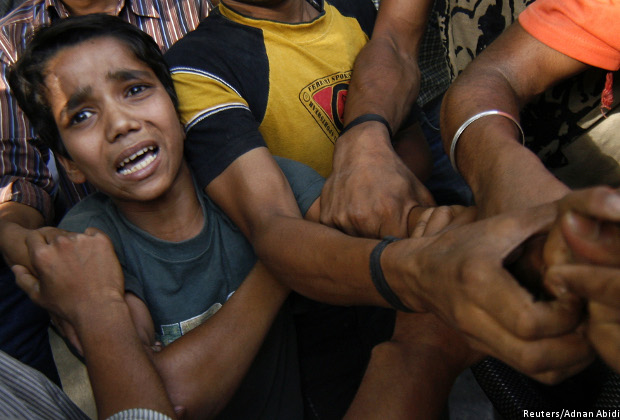
A child labourer cries as he is rescued during a joint operation by Labour department and a non-governmental organisation in New Delhi. India has some of the world’s best anti-slavery laws, better than Europe, but it also has more people living in modern slavery than any other country.

 In terms of prevalence of modern slavery in India, there were 6.1 victims for every thousand people.

Nearly 46 million people live under conditions of slavery across the world, with 18 million (39%) of those in India, which is home to the world’s largest number of slaves, according to 2016 Global Slavery Index.

These 18 million Indians--twice the population of Sweden--have lost their freedom by way of bonded and domestic labour and sexual slavery, among other means.

Globally, modern slavery includes child workers in African mines, deforestation crews in the Amazon or people trapped in commercial sexual exploitation in Europe.

Like the economy, slavery has also become a globalised phenomenon that generates a $150-billion industry, according to Kevin Bales, a professor of contemporary slavery at the University of Nottingham in the United Kingdom; he is also co-founder of Free the Slaves, a nonprofit based in the United States.

In an interview at the 2016 Falling Walls Conference, Berlin, where he was a speaker, Bales reveals it costs no more than Rs 13,000 to free an Indian from slavery. He explains that India has some of the best anti-slavery laws in the world and tells us how we can fight slavery.

1. How do you define slavery? What is the difference between forced labour and slavery?

‘Forced labour’ was coined in 1920s, as colonial powers did not want to use the word slavery. If one person is controlled by another person and violence or coercion is being used by the other person and if that control is for exploitation for labour or sexual or others, then it is a situation of slavery. It is not too different from slavery of the past. Slavery of the past has been legal sometimes but slavery existed before the invention of written law. Slavery is pre-law, pre-legal, the fundamental criteria (for slavery) is that if the person is under complete control and the purpose is exploitation, it would apply to ancient Rome and today. I use the word ‘modern slavery’ simply because it helps people know I am not talking historically.

2. What can you tell us about India, the global slavery index shows that India is one of the five countries with most numbers of slaves?

It is the country with the largest number of slaves. We have done random sample surveys and state-by-state random sample surveys (in India). The proportional share of slaves in India is not the highest. In Mauritania and Haiti, the proportion of slaves is much higher. In India, there are 18 million slaves in a country of 1.3 billion. One of the reasons why we focus on India is that we can get in the country and do the polls which we are not able to do in China where we are still trying. India has really good anti-slavery laws; it is a question of implementation. The laws are, in fact, superior to European laws. On the ground, in India, we have some of the most highly experienced anti-slavery groups, who manage different formulae of liberation addressing different types of slavery. I have been working with some of them over the past 20 years.

bales_620

Kevin Bales, a professor of contemporary slavery at the University of Nottingham in the United Kingdom and co-founder of Free the Slaves, a nonprofit based in the United States, speaks at the 2016 Falling Walls Conference, Berlin.

3. Can you tell us about their work?

In Uttar Pradesh, there are groups that have been working on hereditary forms of slavery--so you have families who have been fundamentally in slavery; they do not even know for how many generations because they only remember back to their grandparents and these things continued on and on. We now know the mechanisms in that space, a community-organising model that can be used, that will break the norms of slavery, village by village, with risk reduced. I have to say, when we began 20 years ago, we had to learn how to mitigate the risk: Villages would come out of slavery to freedom, but the retaliation would be serious to the point of injury and death to the former slaves and also the people who helped them escape. In some ways, it is not a story told well by journalists today--there are people in the world today risking their lives to get other people out of slavery, and no one knows their names and most of them are paid about $100 (Rs 6,518) a month, and there is a story there. They are being shot at, and they get up and do it every day.

4. Is decline of agriculture in India another reason for slavery?

The interesting thing is that there are lot of things people do for business--not just in India, but across the world--with slaves that if they didn’t have slaves for it, they wouldn’t do it. For example, making sand: There are big blocks of silicon and you have people hit it and turn it into sand, and that seems ridiculous because sand is ubiquitous, and it only works financially if you don’t pay the workers. If you break the cycle of enslavement, the sand-by-hand just disappears. Brick-making is another such business. There is a belt from Punjab to Uttar Pradesh, below Nepal, where they make bricks because of the kind of soil found there. You can buy Chinese brick-forming machines for not many rupees, and they don’t need to pay for the machines because they have slaves--children and mothers. As soon as you break it (slavery), either they have to shut down or they have to buy those machines. There is controversy about Uzbekistan and cotton, which is harvested by college students in forced labour. I grew up in the cotton belt in the US, in Mississippi; what really changed there even after the abolition of slavery was the invention of the combined harvester. I have never understood--and I have spoken to the American government about why they don’t just loan them (Uzbekistan) money to buy harvesters from US manufacturers, and then they would not need to take students for forced labour.

5. What is the economic impact of slavery?

According to the UN’s estimation, the global annual turnover of slavery is $150 billion (Rs 9 lakh crore). In a global economy estimated to be $7-12 trillion, $150 billion is just a drop in the ocean. That’s good news because if we live in a world of 7.2 billion people and we have 46 million in slavery, you have a drop in the population ocean and $150 billion is a drop in the economic ocean. The question is, why do we have any slavery at all? One answer is because of laws that are not enforced, and there is low awareness about it. In a country like Norway, which has 5 million people and tight borders, why do they have any slavery? But they do, some hundreds. Some are in commercial establishments, some in agriculture and some in construction. The freedom dividend, we know that there is a freedom dividend, and we are measuring it in some of the places, like India. When people come out of slavery, they get to be consumers, and that means the economic cycle begins to churn, and if they do not have anything but a little bit of food, and they are only producing at the lowest levels, they are zero in the economic equation. But as soon as they start working for themselves, they work very hard. Because one thing that they always want to do is get their children out of the workplace and into a school, and then they start doing things like buying food, clothes and tools and so in areas where slavery is stopped; the local economy begins to grow, even creating opportunities for ex-slaveholders.

6. What kind of jobs do slaves usually do?

It is all about the stuff at the bottom of the economic ladder; it is in agriculture, mining, very simple extraction work, in sex and commercial sex exploitation. It is the simple, dangerous, demeaning work. So when slaveholders find work that no one else wants to do, they find ways to put slaves to do it.

7. What can we do to stop slavery?

If you want to consume your way out of the problem, it has an effect, but it has a low or small effect because you are so many steps away from the problem. If you say you will stop using this product because it has slave labour in it, that is good, but if that is all you are going to do, it won’t change much of anything unless you can convince a billion other people to do it too. The most powerful way would be, the heroes I was talking about, if you can find a way to give them a little bit of support, that is actually the most effective way. Suppose there is this group, in Uttar Pradesh and Tamil Nadu, and say we know every day they are getting people out of slavery and give them 20 Euros a month or something to help that happen, that is really direct because the cost of getting people out of slavery is actually very low. Most people in slavery are not in rich countries, but in poor countries, where the cost of everything is low. In India, when we calculated the cost to free a person, the cost came to $200 (Rs 13,000) per person. If you help free a person in Germany, it will cost $20,000 to $30,000 (Rs 13 lakh to Rs lakh) per person. The medical care, the legal care, the outreach, the offices and rent, it adds up there.

8. Which are the anti-slavery laws in India that are benefitting people?

One of the great laws against slavery is the Bonded Labour System (Abolition) Act 1976, which allows the transfer of a little bit of capital to every person who comes out of slavery and support. When you come out of slavery, you have nothing, no assets and no training, but you know you have a job skill and under Indian law, you get a grant immediately so that you have food, clothing and shelter immediately, and safety, if it is done right. Then in a few weeks, someone comes and talks to them (freed slaves) and then there is a large payment, so they can buy, say, a set of tools or land or what they need to make a living. I know ex-slaves who bought four mobile phones and became “mobile companies” for their village.

Forms of modern slavery

Modern slavery takes many forms. The most common are:

Human trafficking. The use of violence, threats or coercion to transport, recruit or harbour people in order to exploit them for purposes such as forced prostitution, labour, criminality, marriage or organ removal.

Forced labour. Any work or services people are forced to do against their will under threat of punishment.

Debt bondage/bonded labour. The world’s most widespread form of slavery. People trapped in poverty borrow money and are forced to work to pay off the debt, losing control over both their employment conditions and the debt.

Descentbased slavery. Most traditional form, where people are treated as property, and their “slave” status was passed down the maternal line.

Slavery of children. When a child is exploited for someone else’s gain. This can include child trafficking, child soldiers, child marriage and child domestic slavery.

Forced and early marriage. When someone is married against their will and cannot leave. Most child marriages can be considered slavery.

People end up trapped in modern slavery because they are vulnerable to being tricked, trapped and exploited, often as a result of poverty and exclusion. It is these external circumstances that push people into taking risky decisions in search of opportunities to provide for their families, or are simply pushed into jobs in exploitative conditions.

Is there a difference between human trafficking and slavery? As a practical matter, human trafficking is when someone is moved from one place to another for the purpose of enslavement; slavery is the exploitation that happens when they arrive. As a legal matter, however, in many places the term trafficking means enslavement—no movement away from home is required for an anti-trafficking law to apply. About 23 percent of people in slavery are being exploited outside their home country, most people around the world are enslaved right in their home communities. 
The most current available data from the National Crime Records Bureau (NCRB) indicate that there were 8,132 reported cases of human trafficking across India in 2016. In the same year, 15,379 people were trafficked of whom 9,034 victims were below the age of 18. In addition, 23,117 people were rescued from trafficking situations of whom 14,183 people were below the age of 18. The NCRB report notes that the number of rescued victims is higher than the number of trafficked people as rescued victims may also include persons trafficked in the previous year. Most of the rescued victims reported being trafficked for the purpose of forced labour (10,509 victims), followed by sexual exploitation for prostitution (4,980 victims), and other forms of sexual exploitation (2,590 cases).
FORCED LABOUR
While the bonded labour system is formally abolished and criminalised, recent research indicates that bonded labour is still prevalent in India. A 2016 report found that in the state of Tamil Nadu, 351 of 743 spinning mills use bonded labour schemes, otherwise known as Sumangali schemes. Fraudulent recruiters reportedly target families in economically disadvantaged rural areas of India and persuade the parents to send their daughters to spinning mills with promises of good working conditions and the payment of a lump sum at the end of their three-year contracts that might help contribute to dowry costs. In these mills, young women are subject to exploitative labour practices, including restriction of movement, removal of mobile phones, and withholding wages and other payments, in return for the prospect of a lump sum of money. They work 60 hours per week year-round and cannot refuse overtime. Workers are therefore bound to their employer as changing employers would mean losing their promised lump sum. However, many women under those schemes never receive the lump sum payment they are promised because they leave early, often due to illness. Similarly, in granite quarries, wage advances and loans with an interest ranging from 24 percent to 36 percent are used to bond workers to the quarry. According to a study on bonded labour practices in sandstone quarries in Rajasthan, workers become caught in lifelong debt bondage as they owe large sums of money to their employers or contractors and have to work for little or no pay until this is repaid. In some instances this may result in intergenerational transfer of debt as it is common for immediate kin to replace workers who retire due to old age or occupation-related illnesses and to take on their debt. Situations of debt bondage are often aggravated by the need to raise emergency funds or take on loans for health crises. Debt bondage is also used as a form of control in forced sexual exploitation. Survivor interviews revealed managers requested compensation for the money allegedly paid to purchase the victim. With little or no payment given to victims for their work, repaying the debt is almost impossible, trapping them in an indefinite cycle of debt bondage and exploitation. The agricultural sector accounts for 62.7 percent of India’s rural employment, but changing environmental patterns in the eastern state of Odisha, such as irregular rainfall, frequent droughts, and deforestation, have resulted in destruction of traditional livelihoods. The lack of employment opportunities and the need to seek alternative sources of income force people to migrate to other states within India in search of work. Seeking work in brick kilns across the country has become a common phenomenon for people from Odisha. This often involves labour agents who use a system of advance payment where workers are paid a lump sum upfront which they then need to pay off through the bricks they make, consequently trapping them in bonded labour until they have paid off their debt. It is reported that in certain brick kilns accepting a wage advance from a contractor, who acts as an intermediary between the kiln owner and the worker, is seen as a mandatory step to accepting a job, as shown by a study in Punjab in 2014 where 94 percent of those interviewed had taken an advance. The advance system makes it obligatory for the worker to remain in the kiln, and with advances and payments reportedly made via a contractor, there is little scope for workers to seek out other employment opportunities. Instances of forced labour exist among local and migrant domestic workers both within India and overseas who find themselves coerced into hard physical labour and experience conditions of ill treatment, and confinement. Domestic workers are particularly vulnerable as they work in private homes and depend on their employers for basic needs such as food and shelter. This is highlighted in the recent case of a Bangladeshi migrant domestic worker who was held hostage and physically abused by a family in Noida, Uttar Pradesh, after asking for her unpaid salary. Most female domestic workers migrate from India’s least developed regions, such as Jharkhand, West Bengal, and Assam, to urban areas where a growing middle class has created demand for domestic help. Among the estimated six million Indian migrants living in the six Gulf countries of Bahrain, Kuwait, Qatar, Saudi Arabia, United Arab Emirates, and Oman, there have been many documented cases of contract violations and exploitation, often facilitated by unscrupulous recruitment agents who promise well-paid employment under good conditions in the Gulf. However, exploitation is reportedly widespread, especially among those Indian migrants who come to work in unskilled sectors, such as construction, agriculture, and domestic work. Many of these violations also occur as a result of limited protections for migrant workers under labour law in these Gulf countries. An approximate 450 Indian migrants have allegedly died in Dubai since 2014, while Indian officials have claimed that inhumane working conditions are the most common cause of death of Indian migrant workers in the Gulf. 
FORCED SEXUAL EXPLOITATION OF ADULTS AND CHILDREN
There is evidence pointing to an emerging trend in northeast India where organised trafficking syndicates operate undetected along the open and unmanned international borders, duping or coercing young, educated girls seeking employment outside their local area into forced sexual exploitation. According to a Caritas report, trafficking of children is particularly prevalent in the north eastern state of Assam where in 2016 at least 129 girls were forced into sex work by traffickers. Recent survivor interviews in Kolkata, West Bengal, indicate that victims (a majority of whom knew their recruiters) were lured with the promise of a good job but were then forced into sex work. A ‘conditioning’ period involving physical violence, threats, debt bondage, and rape was also commonly used to limit a victim’s ability to resist sex work. 
FORCED MARRIAGE
Female foeticide is a widespread phenomenon in India and has contributed to a shortage in women, such as in the state of Haryana, where there are only 830 girls for every 1,000 boys. Evidence suggests there is a growing trend for brides to move from the poorer eastern or southern parts of the country to the more prosperous areas in the north where there is a higher male to female sex ratio. The skewed sex ratio in some regions in India is fuelling trafficking and selling of brides within India. Women are reportedly sold off into marriage by their families, sometimes at a young age, and end up enduring severe abuse, rape, and exploitation by their husbands. Indian women and girls from impoverished backgrounds are reportedly also lured by promises of marriage by younger men from urban areas, but then forced into sex work once married to their husbands. The men usually formally court the woman and seek approval from her family. This often means the family will not immediately search for or report the woman as missing if contact breaks down once she has fallen victim to sexual exploitation. It is also reported that sometimes the husband returns to the community to shame the family by claiming that the woman or girl has run away so that the family will refrain from reporting their relative to authorities as missing. There are also reported cases of Indian women trafficked overseas for marriage. In 2017, Hyderabad police arrested five Omani and three Qatari nationals, as well as three Muslim priests on charges of human trafficking and child marriage revolving around a scheme marrying young Muslim Indian girls to men from Arab countries. Police reported that in many cases the young brides encountered exploitation in their husband’s home country and were forced into domestic servitude or sexual slavery. Without a social network of support these women are fully dependent on their husband’s family, increasing their chances of ending up in situations of forced labour, sexual slavery, or domestic servitude.
ORGAN TRAFFICKING
Human trafficking for organ removal continues throughout India where growing rates of kidney and liver disease have added to the increasing gap between the demand and supply of organs. With the 2011 Transplantation of Human Organs (Amendment) Act allowing only an immediate relative to be a living donor, there has been a growth in organ traffickers carrying out illegal procedures and forging documents to show donors and recipients as family. In some parts of India, poor people use their kidneys as collateral for money lenders. Researchers have documented instances of kidneys sourced from the “kidney belt” region of southern India being sold to clients in Sri Lanka, the Gulf States, the United Kingdom, and the United States.

USE OF CHILDREN IN ARMED CONFLICT
Armed violence and conflict between armed opposition groups and state forces continue to affect different regions in India. Ongoing conflict in affected regions has disrupted livelihoods and trapped populations in a cycle of violence. There are reported cases of abductions and coercion of children to join Bal Dasta units which train children in front-line operations, and as couriers and informants against national security forces. In April 2016, Maoists reportedly abducted five girls aged between ten and thirteen years of age from Karcha village, West Bengal State. It is reported that the Bharatiya Communist Party (Maoist) forced inhabitants of seven villages in Jharkhand State to hand over five children per village to join their ranks.

IMPORTED PRODUCTS AT RISK OF MODERN SLAVERY
While modern slavery clearly occurs within India, the realities of global trade and business make it inevitable that India, like many other countries globally, will also be exposed to the risk of modern slavery through the products it imports. Policy-makers, businesses, and consumers must become aware of this risk and take responsibility for it. Table 1 lists the top five products (according to US$ value) imported by India from countries which are at risk of using modern slavery in the production of these goods.
Table 1 Imports of products at risk of modern slavery to India
Product at risk of modern slavery
Import value
(in thousands of $US)
Source countries
Laptops, computers, and mobile phones8,338,931China, Malaysia
Sugarcane456,472Brazil
Gold363,795North Korea, Peru
Apparel and clothing accessories360,045Brazil, China, Malaysia, Thailand, Vietnam
Diamonds97,062Angola

Laptops, computers and mobile phones are India’s highest value category of imports at risk of modern slavery (US$8.3 billion). Secondly, India obtains over 99 percent of its overall sugarcane imports from Brazil where there is risk that modern slavery will have been used in its production. The value of this import totals nearly US$457 million. India imports gold produced in Peru and North Korea, both of which are suspected to use modern slavery in their gold mining industries. For example, a report from 2014 documents cases of forced labour among inmates of North Korean prison camps, who were forced to work in gold mines.
Apparel imported from countries at risk of modern slavery amount to US$360 million. Lastly, India imports US$97.1 million worth of diamonds from Angola. Diamond extraction in Angola has over the past decades been linked to torture, murder, and forced displacement, and reportedly relies on both child labour and forced labour. Research suggests that undocumented migrant children from the Democratic Republic of Congo (DRC) enter Angola to work in diamond-mining districts and experience conditions of forced labour or commercial sexual exploitation in mining camps.

VULNERABILITY

India’s economic growth has enabled the country to achieve its Millennium Development Goal of halving poverty. However, ‘low-income states’ such as Jharkhand, Odisha, Rajasthan, Uttar Pradesh, Bihar, Chhattisgarh, and Madhya Pradesh continue to face poverty rates that are disproportionately higher than in other states, with 62 percent of India’s poorer populations residing in these states alone. . Search for better economic and employment opportunities acts as a powerful incentive for people to migrate from low to high income states
and internationally. New estimates of labour migration in India from the Ministry of Finance’s Economic Survey 2016-2017 indicate an annual average flow of close to nine million migrants internally between Indian states for the period 2011-2016.India also has a large influx of labour migrants from neighbouring countries such as Nepal and Bangladesh where open borders with India make it easy for individuals with these nationalities to migrate. A lack of official identity documents increases internal Indian migrant workers’ vulnerability and reduces their capacity to access basic social services. Lack of social networks, as well as cultural and linguistic differences also add to the vulnerability of Indian migrant workers from other states. Children of Indian seasonal migrant workers are a particularly vulnerable group as they face barriers accessing education due to the isolation of the work sites where their parents work. This results in them ending up working alongside their parents. In 2017, it was reported that 200 children who had migrated from Odisha were rescued from a brick kiln where they were living and working with adults.
More than 90 percent of India’s total workforce are engaged in the informal economy in agriculture, forestry, fishing, mining, manufacturing, construction, and service industries. Lack of formal employment opportunities leads individuals to seek employment in the informal sector where withholding of wages, debt bondage, and physical and sexual abuse at the workplace are common. Lower real wages, which are typical of the informal sector, further exacerbate vulnerabilities. With no records or contracts maintained, there is no accountability to hold employers responsible for any exploitation, making informal workers highly vulnerable to exploitative practices.Indian migrant workers, who move seasonally from rural villages to the cities in search of work opportunities, have limited access to support and redress in cases of exploitation due to the informal nature of their work.

The 2016 demonetization aimed at curbing accumulation of black money and funding of criminal and terrorist activity left many of the poorest exposed to increased uncertainty. The ‘demonetised’ (that is, ceasing to be legal tender) Rs 500 and Rs 1000 notes made up 86 percent of the total currency circulation in 2016. Consequently, poorer populations, who rely on cash for their daily purchases of food, medicine, and transport, were most likely to be affected. NGO reports present mixed reviews on how demonetization affected vulnerability to slavery, however, some indicate workers in the informal sector, including brick kilns and sex work, were paid in void currency notes or not paid at all during demonetization, thus increasing their vulnerability to ongoing debt bondage and forced labour.

Discrimination against Scheduled Castes, Dalits, and Scheduled Tribes is still a characteristic of the modern and globalising Indian society, with reports that it is becoming more evident in urban areas. Social stigmatisation and economic marginalisation compounds the unequal power dynamics between marginalised groups, government, and dominant groups who usually own or manage worksites. This is reinforced by other factors, such as inadequate access to healthcare and social benefits, poor working and living conditions, and low literacy, all of which increase marginalised groups’ vulnerability and reduce their ability to escape exploitation.
Women, especially those from economically disadvantaged and marginalised communities, face an increased risk of exploitation. Perceptions of gender inequality, fuelled by practices such as dowry or bride burning, make women more vulnerable to exploitation and abuse, as well as trafficking. Certain recruitment practices even discriminate based on gender and take advantage of families desperate to get their daughters married. For instance, the Sumangali schemes appear to present good opportunities to save for dowry payments but often result in trapping women and girls in situations of debt bondage.

RESPONSE TO MODERN SLAVERY

India has criminalised most forms of modern slavery, including trafficking, slavery, forced labour, and child sexual exploitation, in its Penal Code. However, under section 366 of the Penal Code, forced marriage is only criminalised when kidnapping is present. There is currently no legislation criminalising the use of children in armed conflict. 
There has been significant progress in drafting national legislation to encompass more aspects of modern slavery. A draft Trafficking of Persons (Prevention, Protection and Rehabilitation) Bill was announced in May 2016. The bill calls for the creation of a special agency to investigate trafficking crimes, anti-trafficking committees at the district, state, and central levels, and the establishment of special courts to prosecute trafficking crimes. It also includes provisions for cross-border repatriation of victims from other neighbouring countries. The bill was approved by the Union Cabinet in late February 2018 and will reportedly be presented in the budget session of Parliament, which began in March 2018.

Prepared by the National Platform for Domestic workers, a draft Domestic Workers Regulation of Work and Social Security Bill 2016 has been submitted to the Indian government for consideration. This bill seeks to extend existing labour laws to cover domestic workers and ensure that they are entitled to the minimum wage and to access social security. The bill is still in parliament, awaiting to be passed at the time of writing. In 2016, the government adopted the new “Central Sector Scheme for Rehabilitation of Bonded Labourers”. This scheme recognises the needs of different groups trapped in bonded labour by providing cash compensation of approximately US$1,540 (IND. 1 lakh) for male bonded labourers, US$3,080 (IND. 2 lakh) for female and child bonded or forced labourers, and US$4,620 (IND. 3 lakh) for those physically challenged, trafficked, or commercially sexually exploited.
Importantly, compensation is now available for individuals still on trial and those who have a release certificate confirming evidence of bonded labour. While this represents an increase in compensation as compared to the compensation available under the Bonded Labour Act, there is often little link between compensation, and recovery and rehabilitation. Successful recovery generally requires much broader support services and assistance in accessing such services, both of which are largely provided by NGOs that are often dependent on foreign or private funding.
The Ujjawala and Swadhar schemes initiated by the Ministry of Women and Child Development run shelter and rehabilitation services for rescued women as well as promoting awareness campaigns within local communities. The Ujjawala scheme is specifically for female victims of trafficking whereas the Swadhar program provides support services for victims of domestic violence, homeless women, and women in distress, who are in need of shelter.

The government ratified two core ILO conventions in 2017, namely No. 138 on Minimum Age to Employment and No. 182 on the Worst Forms of Child Labour. With the passing of the Child Labour (Prohibition and Regulation) Amendment Act in 2016, India has set a general minimum working age of 14 years for children and a minimum age of 18 years for hazardous work. This excludes work carried out by the child for his or her family or after school hours and vacations. A National Plan for Action for Children was also established in 2016 to strengthen and monitor national, constitutional, and policy efforts in line with the 2013 National Policy for Children.
The government also supports initiatives such as Track Child and “Khoya-Paya” e-portal that help trace and rescue vulnerable children. Shelter homes for children are provided under the Integrated Child Protection Scheme (ICPS) and the Child Welfare Committees play an important role in making arrangements for protecting rescued children. Additionally, the Indian government revised the guidelines of the National Child Labour Project (NCLP) scheme in 2016 which aims to eliminate all forms of child labour, and launched the corresponding Platform for Effective Enforcement for No Child Labour (PENCIL), which aims to support effective legislative enforcement and implementation of the NCLP.
Despite the existence of legislation and schemes aiming to combat modern slavery, severe gaps between the government’s policy commitments and implementation have been noted. For instance, a 2016 research study of children trafficked for labour exploitation emphasises that there are a range of practical challenges to the rescue and reintegration of victims, such as failure to provide adequate reintegration services, a lack of human and financial resources, limited organisational accountability, and poorly structured partnerships between NGOs and government, among others.
Although the Ministry of External Affairs launched the eMigrate online recruitment system in 2015, ensuring that foreign employers and recruiters comply with regulations and requirements under the Emigration Act 1983 remains an issue. In 2017, the government announced the withdrawal of the requirement that 17 countries under the ‘Emigration Check Required’ category, most of which are in the Gulf, have to provide a refundable bank guarantee of US$2,500 to ensure repatriation and payment of any unpaid wages or medical expenses for Indian workers in cases of exploitation. The removal of this guarantee may increase the vulnerability of Indian workers abroad who are losing a crucial safety net.

According to the National Crime Records Bureau, police investigations and trials related to trafficking continue to increase. In 2016, police arrested a five-member gang on trafficking charges and in 2017, a court in Southern India successfully sentenced a brick kiln owner to ten years in prison and fine of INR16,000 (US$246.59) for trafficking and exploiting workers. However, various factors still deter victims from seeking justice, such as accessing the justice systems from rural or isolated areas and the costs and uncertainty associated with delayed proceedings.
A key challenge in implementing laws criminalising trafficking or bonded labour is also the lack of integrated law enforcement systems for investigation and prosecution across different states in India, leading to a lack of robust investigation of trafficking networks across states.

RESPONSE TO MODERN SLAVERY IN SUPPLY CHAINS

Public procurement

India does not have one central legislative framework governing public procurement. However, government ministries and departments are to comply with the requirements of various guidelines, manuals, and the procedures available for public procurement, none of which specifically refer to modern slavery. In June 2017, the Indian government issued the Public Procurement (Preference to Make in India) Order 2017 as part of the government’s policy to encourage manufacturing and production of goods and services in India. The policy is aimed at giving purchasing preference to local suppliers in public procurement processes. It has been noted that this policy could open the door to including human rights as a consideration in public procurement processes.

Business supply chains

India does not currently have any laws requiring business to report on the actions they are taking to respond to modern slavery risk in their supply chains. The 2013 Companies Act requires mid and large companies to spend two percent of their three-year annual average net profit on Corporate Social Responsibility (CSR) activities, including those that promote poverty reduction, education, health, environmental sustainability, gender equality, and vocational skills development.
The Act also demands that companies set up a CSR board committee that submits an annual report on all CSR activities undertaken. However, it does not specifically require companies to spend this allocated money on modern slavery initiatives. While a positive step forward, the effectiveness of the Act is disputed following claims that some companies who were previously spending more on CSR activities are now scaling back to the mandated two percent as the requirements of the act are seen more as legal compliance rather than a reputation building or branding exercise for companies.
India’s Ministry of Corporate Affairs released the National Voluntary Guidelines on Social, Environmental and Economic Responsibilities for Business (NVGs) which calls on businesses to promote the wellbeing of all employees and prohibits businesses from engaging in “child labour, forced labour or any form of involuntary labour, paid or unpaid”. In 2016, 77 companies in the India Responsible Business Index (which analyses the policies, disclosures and mechanisms of top 100 companies listed on the Bombay Stock Exchange within the National Voluntary Guidelines framework) had a system to ensure the prohibition of forced labour and ensure the health and safety of all employees.

RECOMMENDATIONS

The government of India should:

STRENGTHEN LEGISLATION

  • Ratify and implement the ILO Domestic Workers Convention, 2011 (No. 189).
  • Pass the Trafficking of Persons (Prevention, Protection and Rehabilitation) Bill and provide adequate financial resources towards implementation. When passed, develop training materials for police, judges and prosecutors on how to investigate and prosecute cases.
  • Pass the National Domestic Workers Regulation of Work and Social Security Bill 2016 and provide adequate financial resources towards implementation. When passed, set up a taskforce to ensure the new domestic workers bill is implemented effectively, including training for officials and police on how to handle cases of exploitation of domestic workers.

IMPROVE VICTIM SUPPORT

  • Allocate adequate financial and human resources to local governments to set up units that assist internal migrant workers to access new identification documents, social security benefits, and housing assistance.

STRENGTHEN COORDINATION AND TRANSPARENCY

  • Implement a National Action Plan for all victims of modern slavery that recognises the different contexts of cross-border and localised forms of slavery.
  • Strengthen the role of the National Human Rights Committee (NHCR) as an independent government body to oversee and coordinate India’s response to all forms of modern slavery.

ADDRESS RISK FACTORS

  • Publicly encourage formal, regulated, and safe channels to assist labour migrants.
  • Set up awareness initiatives at local and national borders that provide migrants with contacts of local support organisations.

ERADICATE MODERN SLAVERY FROM THE ECONOMY

  • Encourage companies to fund local initiatives and NGOs which are combatting modern slavery and providing victim services, as part of the fulfilment of the CSR requirements under the 2013 Companies Act.
  • Conduct mandatory labour inspections in high-risk industries within the informal sector, such as brick kilns, textile, and granite/stone/mineral industries.
  • Mandate all industries and businesses to create credible grievance mechanisms that are accessible to vulnerable workers.
  • Pass legislation mandating large companies to annually report on steps taken to eliminate modern slavery in their supply chains.